In New York City, voters will decide on six ballot proposals this fall, including four that affect housing. (City and State, Hell Gate)
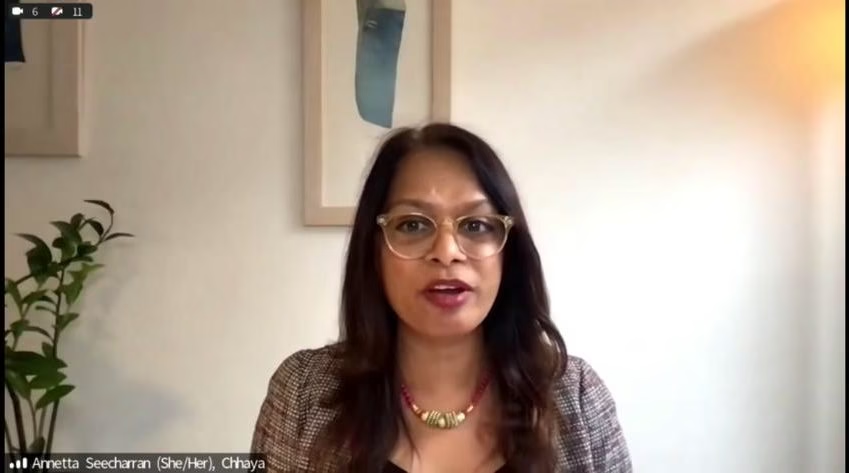
The nonprofit Chhaya CDC is listed as a supporter of the campaign promoting Proposals 2, 3, 4 and 5. Its leadership includes Executive Director Annetta Seecharran (Guyanese) and Deputy Director of Policy Sadia Rahman (Bengali). The campaign has spent over $1 million on independent expenditures advocating for these measures. (NYC Campaign Finance Board)
The housing-related proposals aim to streamline city processes for approving housing projects, including affordable housing. Supporters say this will help build more homes quickly. However, critics argue that the proposals could reduce community oversight and weaken public input, allowing developers more freedom to decide the size, location, and type of new buildings.
Residents are particularly concerned about tall developments next to existing homes. For example, if a developer builds a 25-story tower near your neighborhood, community boards and local residents may no longer have the ability to challenge or influence the project under these measures. Critics also warn that there is no guarantee that housing will be truly affordable, or that it will meet the needs of local families.