Families from Trinidad Sue U.S. Over Deadly Military Boat Strike in Caribbean Waters
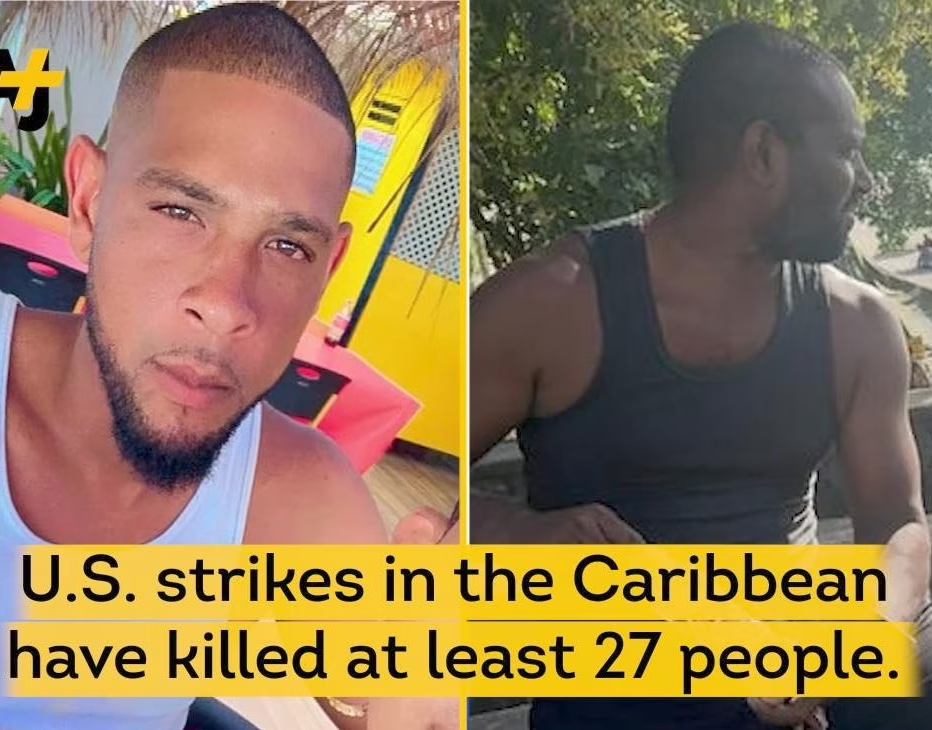
New York, NY – A lawsuit filed in the United States is drawing renewed attention across Trinidad and Tobago after families of Trinidadian men killed in a U.S. military boat strike say their loved ones were wrongly targeted while traveling at sea.
The case, reported this week by CNN, centers on a deadly incident in Caribbean waters in which a small civilian vessel was struck during a U.S. military operation aimed at alleged drug trafficking. According to court filings, the men aboard were not combatants and posed no imminent threat, a claim that has sparked outrage among relatives and raised broader concerns about foreign military actions in the region.
The lawsuit names the United States government and alleges that the strike violated international maritime law. Attorneys for the families argue that the victims were ordinary civilians with ties to Trinidad and Tobago, traveling for work and family reasons, not involved in criminal activity.
For many Trinidadians, the case has struck a nerve. Fishing, inter-island travel, and informal maritime routes have long been part of life in the southern Caribbean. Community leaders say the idea that civilian boats could be mistaken for criminal targets raises serious questions about safety, accountability, and respect for regional sovereignty.
The U.S. government has defended its broader maritime operations as part of an aggressive campaign against drug trafficking networks, citing national security concerns. However, critics argue that the expansion of military force into Caribbean waters risks harming innocent people, particularly those from small island nations who depend on the sea for their livelihoods.
Legal experts note that the case could be significant. The families are seeking damages under U.S. laws that allow foreign nationals to sue for wrongful deaths that occur on the high seas. If successful, the lawsuit could set a precedent for how Caribbean victims of foreign military actions seek justice.
In Trinidad and Tobago, reactions have ranged from anger to grief. Advocacy groups are calling on local officials to press Washington for answers and to demand clearer safeguards to protect civilians traveling in regional waters.
As the case moves forward in U.S. courts, many in Trinidad will be watching closely. Beyond the legal arguments, the lawsuit has become a reminder that decisions made far from the Caribbean can have deadly consequences for people at home, turning an international security policy into a deeply personal loss for island families.