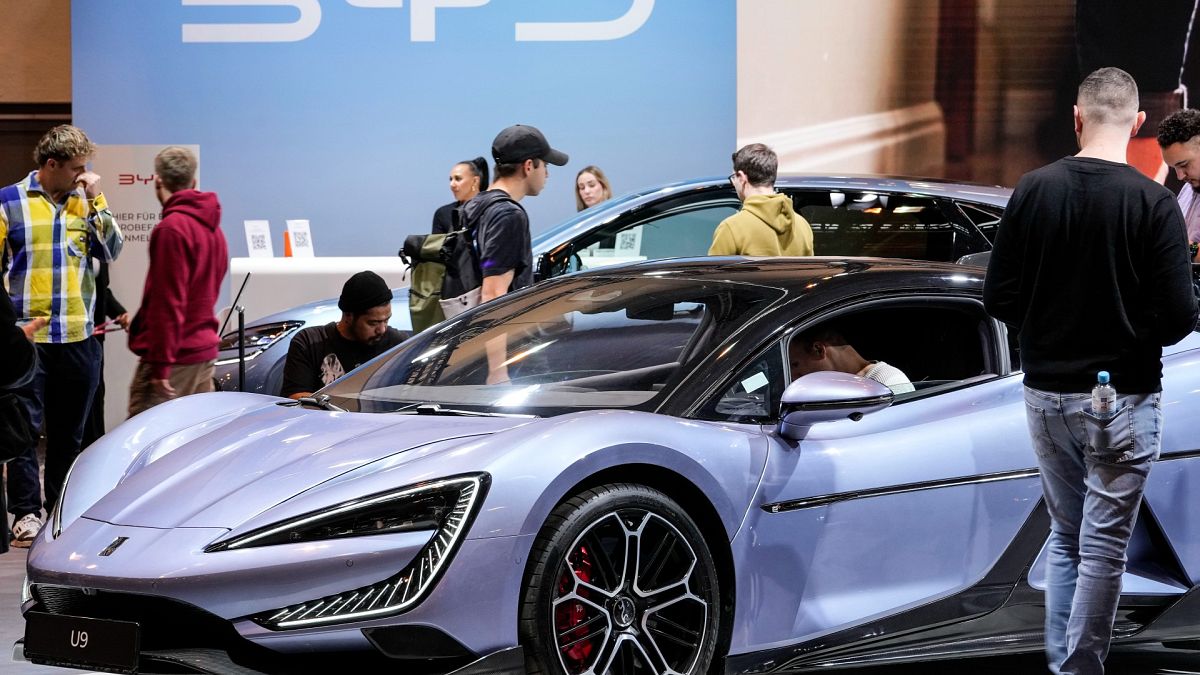
The United States has long argued that restricting Chinese vehicles is necessary to protect national security and strengthen domestic automobile manufacturing. While protecting sensitive technology and consumer data is a legitimate government responsibility, the current approach risks reducing consumer choice, limiting competition, and slowing innovation.
One of the clearest examples is Polestar's departure from the U.S. market. The company is winding down its American operations after being unable to comply with federal regulations that prohibit the sale of connected vehicles containing certain Chinese or Russian software and hardware. Because Polestar is majority-owned by Geely, it was denied the authorization that allowed some competitors to continue operating in the United States.
Admin · July 5, 2026
Ad SpaceArticle page — above the body
New York, NY - The United States has long argued that restricting Chinese vehicles is necessary to protect national security and strengthen domestic automobile manufacturing. While protecting sensitive technology and consumer data is a legitimate government responsibility, the current approach risks reducing consumer choice, limiting competition, and slowing innovation.
One of the clearest examples is Polestar's departure from the U.S. market. The company is winding down its American operations after being unable to comply with federal regulations that prohibit the sale of connected vehicles containing certain Chinese or Russian software and hardware. Because Polestar is majority-owned by Geely, it was denied the authorization that allowed some competitors to continue operating in the United States.
As a result, Polestar will no longer introduce future vehicles such as the Polestar 5 and Polestar 6 to the American market. Dealers are selling off remaining 2025 and 2026 inventory, often with significant discounts. Existing customers will continue receiving warranty and service support, but the company's dealership network faces an uncertain future and may shift primarily toward service and maintenance centers.
The consequences extend beyond one manufacturer. American consumers lose access to additional competition in the electric vehicle market, while buyers in Europe, Canada, Latin America, Southeast Asia, and other regions continue to benefit from greater product diversity and technological advancement.
The contrast is especially clear when comparing Buick in China and Buick in the United States. Although many shared Buick models look similar on the outside, the Chinese versions often feature more luxurious interiors, premium materials, advanced technology, and executive-level rear seating with heating, cooling, massage functions, and passenger controls. In China, Buick is treated as a prestigious luxury brand. In the United States, it is positioned more as a mainstream brand.
Ad SpaceArticle page — mid-body
China also enjoys a far broader Buick lineup, including large sedans, station wagons, hybrid models, electric vehicles, and executive luxury minivans such as the GL8 and Century. By comparison, Buick's American lineup has been reduced almost entirely to crossover SUVs, including the Envista, Encore GX, Envision, and Enclave.
This raises a serious question: What sense does it make to protect American automakers from foreign competition when many of those same companies operate extensively outside the United States? Major American manufacturers have invested billions of dollars in factories, research facilities, and partnerships around the world. They manufacture and sell vehicles in foreign markets while relying on global supply chains to remain profitable.
If globalization is acceptable when American companies benefit from foreign markets, then it is fair to question whether the U.S. should close its own market to competitors under the banner of protecting domestic manufacturing. Protectionist policies may offer temporary relief to some companies, but they can also reduce competition, limit consumer choice, and remove incentives for automakers to improve quality, technology, and affordability.
National security concerns surrounding connected vehicle technology should be taken seriously. But broad restrictions should not become a convenient excuse to shield large corporations from competition. A better approach would be targeted security standards, transparent compliance requirements, and rigorous testing that protect consumers without unnecessarily limiting choice.
America should not be afraid of competition. If U.S. automakers build the best vehicles, consumers will buy them because they offer superior value, quality, and innovation, not simply because competing products have been banned. The long-term strength of the American auto industry should come from competing and winning, not from locking better or more affordable options out of the market.