Indo-Guyanese Candidate Challenges Lander and Goldman at Downtown Democratic Forum
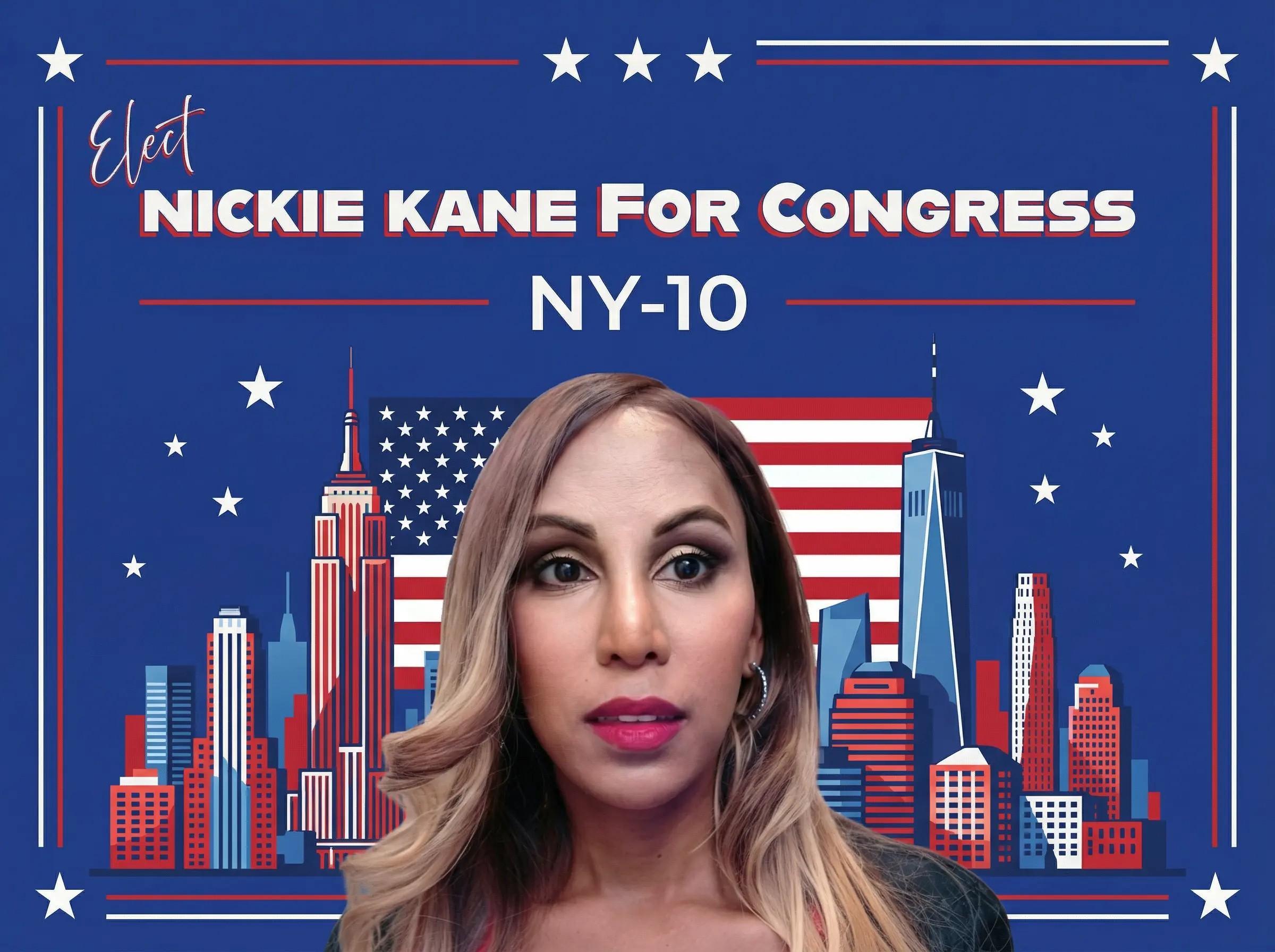
New York, NY – A Guyanese-American congressional candidate took direct aim at two well-known political figures this week during a candidate forum hosted by the Grand Street Democrats and Three Bridges Democrats, sharpening contrasts in what is shaping up to be a closely watched primary contest.
Nickie Kane, who identifies as Indo-Guyanese, addressed former New York City Comptroller Brad Lander and incumbent Congressman Dan Goldman during the Lower Manhattan forum, challenging both on issues of representation, immigration, affordability, and community engagement.
If elected, Kane would become the first Indo-Guyanese American to serve in the United States Congress, according to her campaign. While several lawmakers with Guyanese heritage have held federal office, including Shirley Chisholm, Stacey Plaskett, and Sheila Cherfilus-McCormick, all are Afro-Guyanese. Kane’s candidacy highlights the distinct demographic and historical identity of Indo-Guyanese Americans, a diaspora community that traces its roots to Indian indentured laborers brought to Guyana during British colonial rule.
At the forum, Kane framed her campaign as both policy-driven and historic. She argued that immigrant and working-class communities in New York deserve broader representation in Congress, particularly as housing costs and inflation continue to weigh on families.
In addressing Lander, a longtime city official with deep ties to New York’s Democratic establishment, Kane questioned what she described as a pattern of insider politics. Turning to Goldman, she referenced his background as heir to the Levi Strauss denim fortune, contrasting it with her own immigrant and working-class narrative.
Goldman, who represents parts of Manhattan and Brooklyn, has emphasized his legal background and role in the first impeachment inquiry against former President Donald Trump. Lander has highlighted his tenure as comptroller and City Council member. Both campaigns have built substantial fundraising operations and established political networks.
Kane, by contrast, is positioning herself as an outsider candidate seeking to mobilize diaspora voters and small-dollar donors. She has publicly expressed frustration that she has not received stronger backing from segments of the Indo-Guyanese community in New York and across the United States. Supporters say increasing awareness of her candidacy could help expand fundraising and voter engagement among Guyanese Americans nationwide.
New York is home to one of the largest Guyanese populations outside of Guyana, with particularly strong concentrations in Queens and Brooklyn. Community leaders note that while Afro-Guyanese Americans have achieved federal representation, Indo-Guyanese Americans have not yet elected a member of Congress.
Kane’s campaign argues that symbolic milestones matter alongside policy priorities. Advocates say representation can encourage greater civic participation and visibility for diaspora communities whose concerns are often folded into broader South Asian or Caribbean categories.
Political analysts caution that identity alone does not determine electoral outcomes, particularly in districts where diverse coalitions are required to win. Still, Kane’s candidacy has opened discussion within the Guyanese diaspora about political engagement, fundraising participation, and long-term leadership development.
As the primary approaches, Kane’s path will depend not only on voter turnout within her district but also on whether diaspora networks respond to her call for support. Her campaign maintains that broader awareness among Indo-Guyanese Americans could translate into the financial and volunteer infrastructure needed to compete in a race dominated by well-funded opponents.