Zionist vs. Liberal Zionist, Two Sides Same Coin
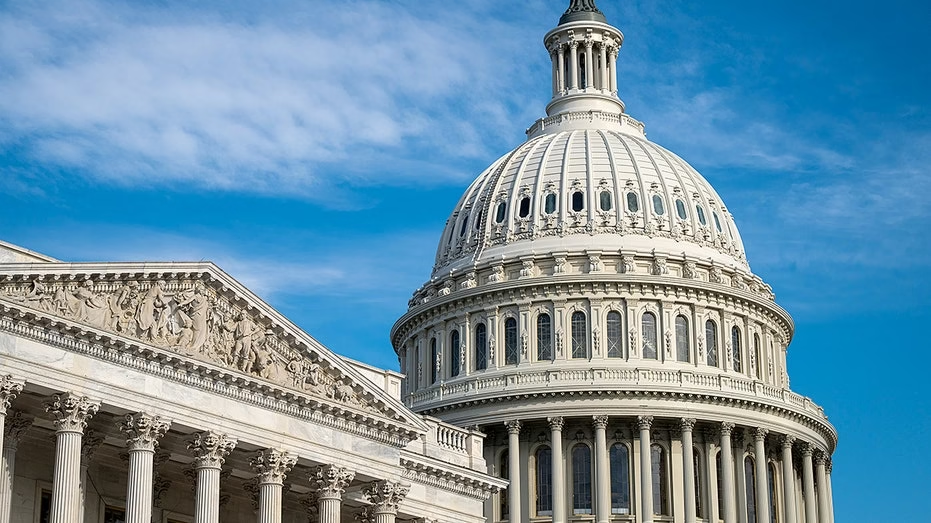
As the Democratic primary for New York’s 10th Congressional District intensifies, growing attention is being paid to the candidates’ voting records, financial ties, and policy positions related to Israel, immigration enforcement, and corporate influence.
The race includes incumbent Dan Goldman, former citywide official Brad Lander, and grassroots challenger Nickie Kane, each offering sharply different visions for the district.
Financial Ties and Corporate Exposure
Public pension investments and campaign finance disclosures have placed a spotlight on corporate ties linked to Israel’s defense and surveillance sectors.
During his tenure as New York City Comptroller, Lander served as custodian of the city’s five public pension systems. Public disclosures show that pension funds overseen during that period significantly increased holdings in Palantir Technologies, a U.S.-based company whose software has been used extensively by Immigration and Customs Enforcement to track and deport undocumented immigrants. Palantir has also worked with defense and intelligence agencies globally, placing it at the center of civil liberties and surveillance debates.
Pension portfolios have also included exposure to Elbit Systems, Israel’s largest weapons manufacturer, which produces drones, surveillance systems, and military technology used by the Israeli armed forces. Human rights organizations have criticized Elbit’s role in military operations in Gaza and the occupied West Bank.
Other Israeli-linked companies commonly cited in diversified portfolios include Teva Pharmaceuticals, as well as firms tied to Israel’s cybersecurity and defense technology sectors.
Large U.S. financial institutions frequently referenced in connection with these investments include JPMorgan Chase, Bank of America, Citigroup, and Goldman Sachs, which have provided financing, underwriting, or asset management services connected to Israeli government bonds and defense firms.
Supporters argue that such holdings reflect standard global diversification and fiduciary obligations. Critics counter that public funds and political campaigns should not be linked to military contractors, surveillance technology, or immigration enforcement practices that raise human rights concerns.
AIPAC and Campaign Funding
Campaign finance filings show that incumbent Rep. Goldman has received support from donors affiliated with pro Israel lobbying networks, including individuals aligned with American Israel Public Affairs Committee. Goldman has been a consistent supporter of military aid to Israel and voted in favor of recent multi billion dollar aid packages.
Grassroots challenger Kane has made opposition to AIPAC funding a central campaign message, stating she will not accept money from the group or affiliated political action committees. Kane has called for conditioning or restricting offensive military aid and prioritizing diplomacy and human rights.
Lander has emphasized his personal opposition to hardline Israeli government policies while noting that pension investment decisions were constrained by fiduciary rules and trustee governance structures.
Immigration Enforcement and ICE
Immigration policy has emerged as another key fault line in the race. Palantir’s role in ICE operations has drawn renewed scrutiny amid a national debate over immigration enforcement tactics.
Kane has sharply criticized ICE, citing recent deaths connected to enforcement actions and calling for stripping the agency of its authority to conduct arrests without signed judicial warrants. She has argued that deportation decisions should be made exclusively by judges, not federal agents issuing administrative warrants.
Goldman has supported increased border enforcement funding while defending oversight mechanisms. Lander has been publicly critical of ICE and has been arrested in the past while observing immigration court proceedings, positioning himself as a vocal opponent of aggressive enforcement practices.
Social Media and Public Controversies
Goldman has also faced criticism over past social media posts that activists and constituents have described as dismissive of Palestinian suffering. While Goldman has defended his statements as support for Israel’s security, critics argue they reflect a broader pattern of minimizing civilian harm and opposing calls for ceasefire measures.
The debate has been amplified by recent viral social media posts from Kane comparing deaths caused by undocumented immigrants to deaths linked to ICE enforcement. As of this week, one such post has surpassed 2.3 million views, intensifying national attention on the NY-10 race.
A District at a Crossroads
With petition deadlines approaching and redistricting disputes adding further uncertainty, the NY-10 contest has become a focal point for broader Democratic debates over foreign policy, immigration, corporate power, and human rights.
Voters in lower Manhattan and Brooklyn now face a choice not only between candidates, but between competing frameworks for how public money, political influence, and federal power should be exercised in an era of global conflict and domestic unrest.
As the primary approaches, these issues are expected to remain central to the race, shaping both campaign messaging and voter engagement across the district.